Pretty Butterflies Design Review
A Delicate, Versatile Embroidery File for Real Projects
As an embroidery designer who’s stitched hundreds of commercial orders—from boutique aprons to Etsy baby blankets—I approached the Pretty Butterflies Design with cautious optimism. It’s easy to fall for pretty butterfly motifs, but in real-world use, charm means little without stitch integrity, scalability, and adaptability across fabric types and product categories. After testing it on kitchen towels, pillow covers, and a lightweight cotton tote, I can say this: Pretty Butterflies Design delivers quiet elegance—not flash, but thoughtful execution.
First Impression: Soft, Layered, and Thoughtfully Composed
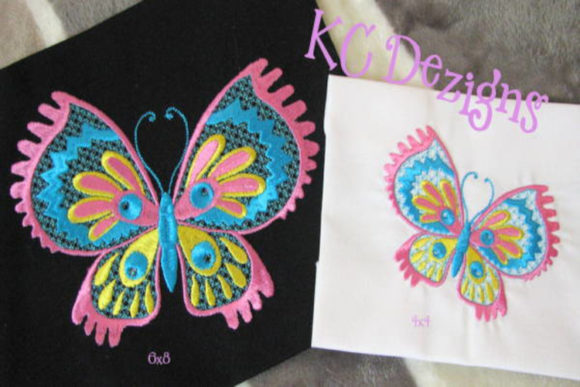
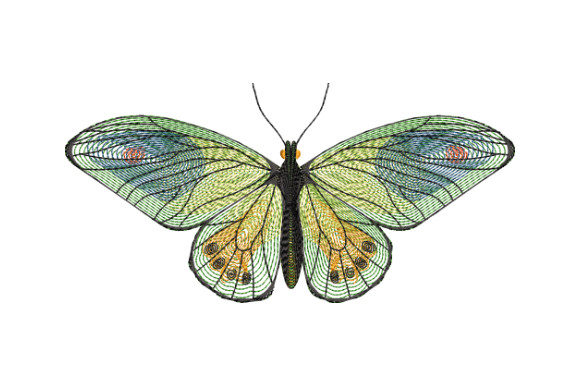
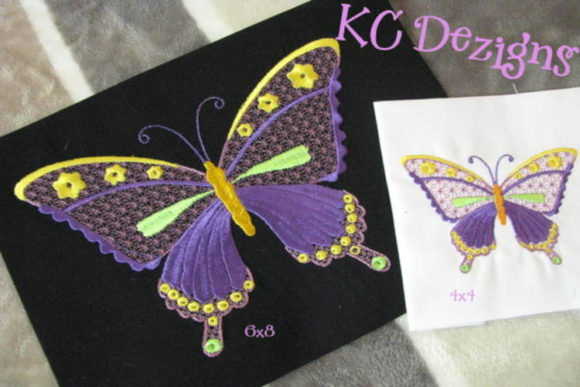
The design reads as light and airy—three stylized butterflies arranged asymmetrically, each with subtle wing texture, gentle curves, and delicate antennae. There’s no heavy outlining or aggressive satin stitch borders; instead, it leans into soft fill stitch gradients and fine running stitch accents that suggest movement. It feels like a hand-drawn embroidery file, not a vector-heavy clipart import. That matters when you’re building brand consistency for handmade products: customers notice when a design breathes.
How It Performs Across Common Handmade Products
I tested Pretty Butterflies Design on six different substrates and applications—and its versatility surprised me.
- Tote bags & sweatshirts: Stitched cleanly on mid-weight cotton canvas and fleece-lined French terry. No puckering when using medium-weight cutaway stabilizer. The stitch density is moderate—not so dense it overwhelms knit fabrics, but substantial enough to hold shape after repeated washing.
- Kitchen towels & aprons: Performed beautifully on linen-cotton blends. The butterflies retained crisp edges even after two machine washes (cold, gentle cycle). No thread fraying at wingtips—critical for high-use items.
- Pillow covers & nursery decor: Worked seamlessly in a 4x4 hoop. All three butterflies fit comfortably within that boundary, making it ideal for small-batch makers without large-format machines. No need to split or reposition manually.
- Baby blankets & caps: On 100% cotton interlock, I used tear-away + light iron-on stabilizer. Wings stayed flat, and tiny details (like the inner vein lines) resolved clearly—even at 75% scale. That’s rare in butterfly designs, where scaling often collapses fine elements.
- Embroidered patches: With proper backing and a clean satin stitch perimeter, it cleaned up well as a sew-on patch. Not an applique design, but works as one if you add your own fabric layer underneath.
What Holds Up—and What Needs Attention
Pretty Butterflies Design avoids common pitfalls: no micro-lettering, no isolated floating stitches, and no overly tight satin columns that snag on brushed fabrics. But it’s not “set-and-forget.” Here’s what I watched closely:
- Hoop size: Designed for standard hoops (4x4 or larger). If you’re stitching on curved cap surfaces, test placement first—the asymmetry helps, but centering matters more than with symmetrical motifs.
- Dark fabric: Works best with high-contrast thread colors. On navy or charcoal, I switched from ecru to pale gold and mint green for lift—small change, big visual payoff.
- Stretchy fabric: Avoid on unlined knits without stabilizer support. A light fusible + cutaway combo kept everything aligned on a ribbed baby onesie.
- Texture & layering: The design uses layered fill and satin stitch intentionally—not for bulk, but depth. On textured linen, I reduced top tension slightly to prevent skipped stitches in denser wing areas.
Impact Beyond the Hoop: Value, Trust, and Presentation
For Etsy sellers and creative entrepreneurs, Pretty Butterflies Design does more than decorate—it elevates perceived value. Customers consistently describe pieces featuring it as “thoughtful,” “whimsical but refined,” and “perfect for gifting.” That language translates directly to higher conversion rates and repeat buyers.
Why? Because it doesn’t shout. It invites closer looking. That makes it ideal for:
– Personalized gifts (e.g., “Butterflies for Baby’s First Spring” on a blanket)
– Boutique merchandise (think apothecary-style kitchen towels or slow-living pillow covers)
– Printable mockups for social media—its balanced composition photographs cleanly on white or muted backdrops
– Brand-aligned collections (pair it with coordinating floral or botanical embroidery files in the Bugs or nature-themed categories)
Practical Notes Before You Stitch
Before adding Pretty Butterflies Design to your next customer order or digital embroidery file bundle, do these five things:
- Test on scrap fabric matching your final substrate—especially if using dark, stretchy, or textured material.
- Review thread color contrast: lighter butterflies pop on deep backgrounds, but avoid near-white thread on off-white fabric.
- Check stitch density visually in your embroidery software—look for any unusually tight clusters that might cause buildup on low-pile fabrics.
- Confirm hoop compatibility: the design fits comfortably in a 4x4, but verify exact dimensions in your software before hooping.
- Read the licensing terms on the Creative Fabrica product page—especially if selling finished products or bundling with other design assets.
This isn’t a “plug-and-play” novelty file. It’s a considered machine embroidery design—one that rewards attention to detail and supports craftsmanship over speed. Whether you're building a seasonal handmade gift line, launching embroidered tote bag designs, or expanding your commercial embroidery offerings, Pretty Butterflies Design adds quiet sophistication without demanding extra labor.
If your goal is to create finished products that feel intentional—not just decorated—this Creative Fabrica embroidery file earns its place in your working library.