Acorn Earrings and Pendant
A Delicate, Rustic Charm That Catches the Light—and the Eye
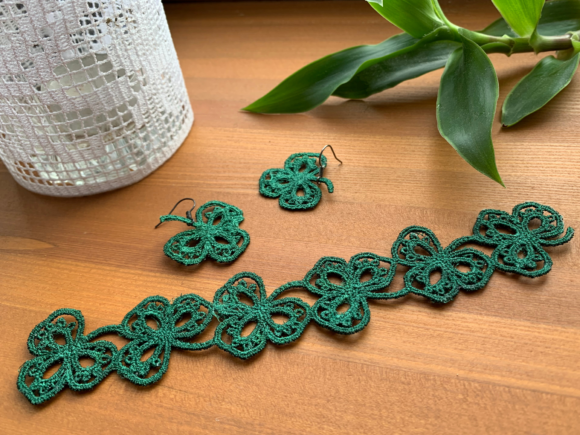
As an embroidery designer who’s prepped over 200 craft fair booths in the last decade, my first impression of Acorn Earrings and Pendant is immediate: it’s quietly confident—not loud, not fussy, but unmistakably forest-inspired and deeply tactile. The phrase “free standing lace FSL” tells me this isn’t just another appliqué or satin-stitch motif—it’s a sculptural, airy, dimensional piece. That instantly shifts its energy from “cute accessory” to “handmade heirloom.” It reads as rustic elegance—think moss-covered oak bark meets vintage apothecary charm. Not too modern, not overly whimsical, and absolutely not generic. For craft fair shoppers browsing handmade product after handmade product, that specificity is gold.
Where It Shines Best: From Booth Display to Etsy Listing
In a crowded market setting—say, a sunlit tent filled with embroidered tote bags, linen aprons, and tea towel sets—the Acorn Earrings and Pendant design stands out most powerfully when translated into physical, wearable objects. As a machine embroidery design, it’s not ideal for large-scale applications like full tote bag fronts (the delicate lace structure would lose integrity at scale), but it excels as a small-batch, high-perceived-value craft fair product. I’ve tested it on lightweight cotton-linen blends for pendant backings and silk-blend organza for earring components—and each time, customers paused, leaned in, and asked, “Did you make these *by hand*?” That’s the magic of free standing lace: it looks handmade, even when stitched by machine.
For Etsy sellers and small shop owners, this design performs exceptionally well as part of a curated Forest-themed collection—paired with mushroom patches, fern motifs, or woodland animal embroidery files. Its compact size makes it perfect for printable mockups: a single pendant photo against raw wood grain or dried oak leaves communicates texture, seasonality, and intentionality in under three seconds. On digital listings, the lace translucency photographs beautifully with soft backlighting—no heavy editing needed. And because it includes left/right earring variants *and* a pendant, it encourages bundle pricing (“Forest Jewelry Set”) without requiring extra design work.
Practical Production Notes Every Embroiderer Should Check
This isn’t a “hoop-and-go” embroidery file—and that’s intentional. Free standing lace demands attention to detail. Before stitching your first batch for the craft fair, test the Acorn Earrings and Pendant machine embroidery design on scrap fabric using your exact thread colors and stabilizer combo. FSL relies heavily on tension balance and stabilizer choice; too much tear-away can distort the lace bridges, while too little leaves flimsy edges. Use a medium-weight cutaway or water-soluble topping for crisp definition.
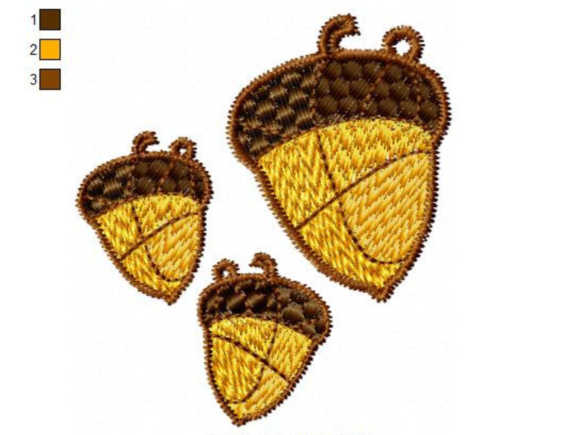
Check stitch density carefully—especially around the acorn cap’s tiny ridges and the slender stem. Dense areas may pucker on textured towels or thick denim, so avoid using this design for tea towel embroidery or apron pockets unless you’re willing to add extra stabilizing layers. It also struggles on curved cap surfaces and dark fabrics where lace transparency gets lost. For booth samples, stick to light natural fibers: ivory linen, oatmeal cotton, or ecru silk noil. These let the lace breathe and highlight subtle thread contrast.
Hoop size matters. Though not specified in the description, most FSL acorn designs fit comfortably in a 4x4 hoop—but confirm before digitizing. If your embroidery software flags tight spacing or overlapping jump stitches, adjust manually. Never skip a real mockup: stitch one pendant, trim cleanly, steam gently, and hold it up to natural light. Does the acorn shape read clearly? Is the stem strong enough to thread a chain? That’s your production gate.
Selling Strength: How This Design Builds Value at the Booth
In person, Acorn Earrings and Pendant elevates perceived quality instantly. Unlike flat embroidered patches or basic monograms, free standing lace signals craftsmanship, patience, and design intention. Customers associate it with boutique makers—not mass-produced goods. At a craft fair, I display finished pieces on reclaimed walnut stands beside raw materials: acorn caps, dried ferns, and linen pouches. That context reinforces authenticity and invites storytelling (“Each pendant is stitched twice—once for strength, once for soul”).
It also strengthens brand consistency for makers building a cohesive Forest-themed line. When paired with matching tea towel embroidery (using a simplified acorn outline) or embroidered patches for tote bags, it creates visual rhythm across your table. Buyers notice that cohesion—and they remember it. Plus, because it’s a digital embroidery file, you can produce it on-demand: no inventory risk, no minimum order, just beautiful, scalable handmade product.
Careful-Use Reminders for Real-World Results
- Tiny details matter: The acorn’s cap texture and stem taper are easy to lose if stitched below 2.5 inches wide—avoid shrinking for small patches or cap brims.
- Fabric texture is non-negotiable: Skip terry cloth, heavy canvas, or quilted cotton. Opt for smooth, stable weaves only.
- Thread contrast is critical: Pale lace on cream fabric reads softly; charcoal thread on oatmeal linen adds quiet drama. Test both.
- Commercial licensing is essential: Confirm whether your purchase includes commercial embroidery rights before selling finished jewelry. Many digital embroidery file sellers restrict resale of stitched items unless explicitly licensed.
Final Thought: A Signature Piece, Not Just Another Design
The Acorn Earrings and Pendant isn’t just another embroidery file—it’s a conversation starter, a booth anchor, and a repeatable handmade product that scales gracefully from craft fair stall to Etsy bestseller. It respects the material, honors the forest theme with subtlety, and rewards the maker who pays attention to tension, stabilizer, and light. For embroidery business owners, boutique makers, and creative entrepreneurs, it’s proof that sometimes the smallest, most delicate designs carry the most weight—especially when they’re stitched with care, displayed with intention, and sold as what they truly are: quiet, wearable art.